What movers will not move, and what to do with each item
Federal hazmat rules, plant quarantines and liability limits decide most of the list. Here is what stays off the truck, why, and where it goes instead.
- Licensed: ILCC 73744 MC-C
- Family-run since 1986
- Wheaton World Wide agent
- Free in-home estimates
What do movers not take?
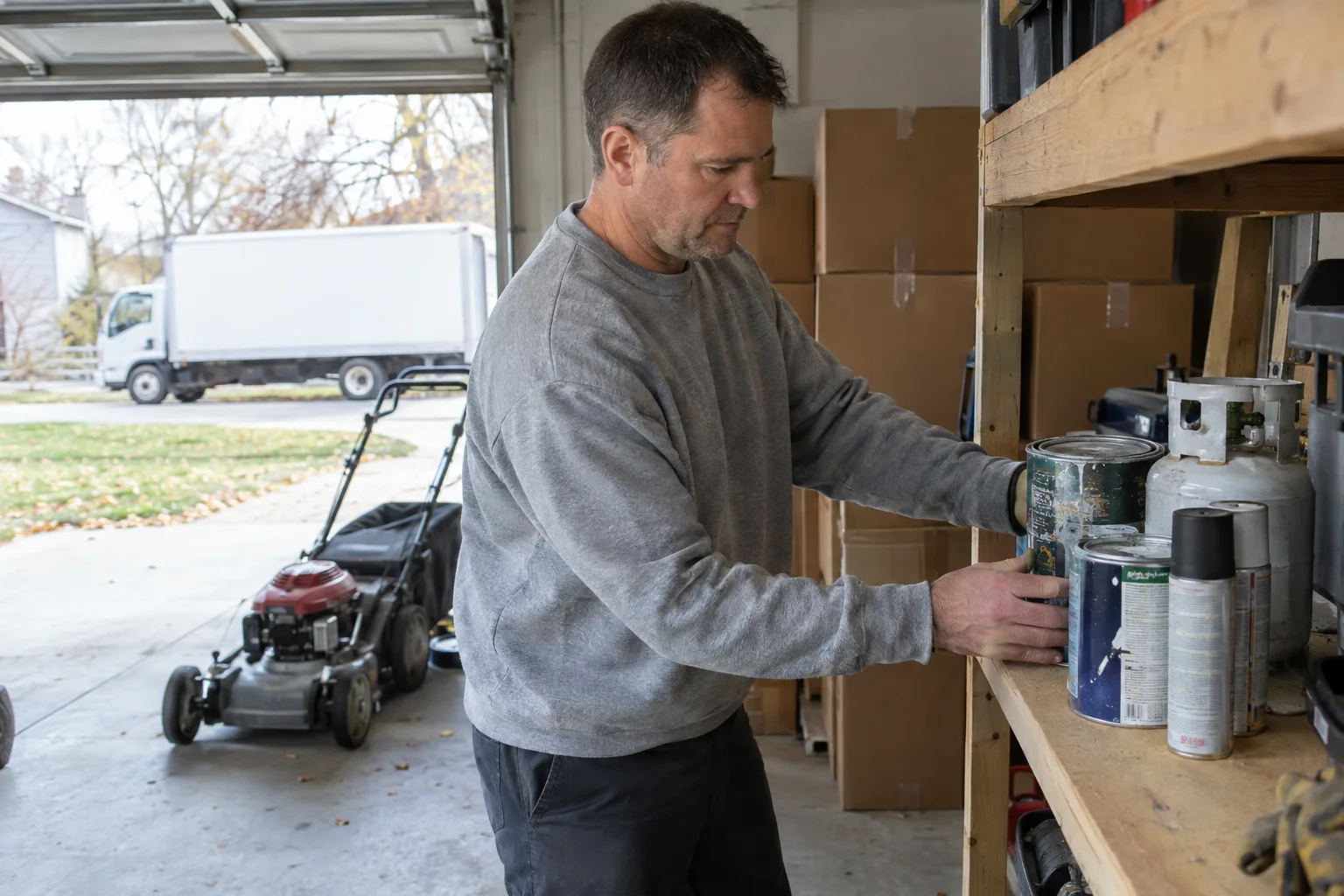
Movers won’t load hazardous materials such as gasoline, propane cylinders, paint, thinners, aerosols, fireworks, ammunition and pool chemicals, because federal law treats them as regulated hazmat. Most also turn away perishable food, pets, live plants on longer moves, and irreplaceable items like cash, jewelry, medicine and documents. Your mover will give you its own list; these are the common federal categories.
Get your free moving quote
Tell us where and when. Amenity’s Plainfield office replies directly.
On this page
Four groups of items movers turn away
Almost every item a mover refuses falls into one of four groups: things that can burn, explode or leak; things that spoil; things that are alive; and things too valuable or personal to put on a truck. A fifth group, items movers take only with conditions, covers firearms, fuel-powered tools and appliances with gas or water lines.
Each company keeps its own do-not-ship list, and the details differ. Amenity Moving & Storage, which operates this site, asks customers to call for its full list of items that shouldn’t be packed. The table below is not any one company’s list. It sets out the categories that federal rules and everyday practice keep off a moving truck, so you can start sorting before anyone gives you a quote.
| Group | Common examples | Why it stays off the truck | What to do instead |
|---|---|---|---|
| Hazardous materials | Gasoline, propane cylinders, paint and thinner, aerosols, lighter fluid, fireworks, ammunition, pool chemicals, car batteries | Federal law forbids shipping hazmat in household goods without telling the mover; fire, explosion and contamination risk | Use it up, give it away, or take it to a household hazardous waste site |
| Perishables | Frozen and refrigerated food, produce, open containers | Spoils and leaks; perishables shipped without the mover’s knowledge can limit its liability | Eat down the pantry, donate sealed food, carry a cooler |
| Living things | Pets, fish, houseplants on long moves | A closed cargo box is no place for an animal; plants and outdoor items can carry regulated pests | Move pets yourself; check plant rules for the destination state |
| Valuables and papers | Cash, jewelry, medicine, passports, closing documents, laptops, family photos | Hard to value, easy to misplace, and the Illinois Commerce Commission tells consumers the mover is not responsible for them | Keep them in your car or carry-on bag |
Hazardous materials: what federal rules actually say
Federal law forbids you to ship hazardous materials in your household goods boxes or luggage without telling your mover. The Federal Motor Carrier Safety Administration’s consumer guidance on mover liability warns that a violation can result in five years’ imprisonment and penalties of $250,000 or more under 49 U.S.C. 5124, and that hazmat in a load can destroy the rest of your belongings through fire, explosion or contamination.
If you do hand hazmat to a mover, FMCSA says you become a hazardous materials shipper under 49 CFR Parts 171, 172 and 173, responsible for packaging, labeling, marking, shipping papers and emergency response information. No household move is set up for that paperwork, which is why movers put these products on their do-not-pack lists instead of accepting them.
FMCSA groups hazardous materials into explosives, compressed gases, flammable liquids and solids, oxidizers, poisons, corrosives and radioactive materials. Its own examples are nail polish remover, paints, paint thinners, lighter fluid, gasoline, fireworks, oxygen bottles, propane cylinders, automotive repair and maintenance chemicals, and radio-pharmaceuticals.
Household products that count as hazmat
The U.S. Department of Transportation’s Check the Box hazmat list names everyday products that are regulated in transport. These are the ones that turn up most often when a house is being packed:
- Aerosol cans: spray cleaners, disinfectants, hairspray and spray paint
- Fuels and fuel-powered equipment: gasoline, diesel, kerosene, propane, and any mower, trimmer or generator with fuel still in it
- Paints, paint thinners and removers, and wood stains, sealants and varnishes
- Bleach, swimming pool chemicals, fertilizers, insecticides and pest-control products
- Car batteries, lithium batteries, power banks and portable chargers
- Ammunition and gunpowder, consumer fireworks, lighters and matches
- Compressed gas: carbon dioxide cylinders, scuba tanks, oxygen tanks and fire extinguishers
- Rubbing alcohol, high-proof spirits, flammable essential oils, perfume and nail polish
DOT notes that its list is not complete. When you’re unsure about a product, find its Safety Data Sheet on the manufacturer’s site; the transportation information section shows whether it is regulated in shipping.
The small-quantity exception
FMCSA allows small quantities, up to 70 ounces total, of medicinal and toilet articles carried in your household goods, and certain smoking materials carried on your person. Your mover can still decline them, so ask before you pack the medicine cabinet.
Hiding hazmat in a box also hurts you if something goes wrong. The federal Your Rights and Responsibilities When You Move booklet lists shipping perishable, dangerous or hazardous materials without the mover’s knowledge as one of the acts that can limit or reduce the mover’s liability for loss or damage.
Garage and yard items: mowers, grills, propane and paint
The garage holds most of what a mover can’t take, so start there two or three weeks before moving day. Fuel-powered tools are the usual sticking point: DOT lists fuel-powered equipment containing fuel as hazmat, so a lawn mower, snow blower, leaf blower, string trimmer or generator needs an empty tank before it is loaded. Amenity’s packing guidance specifically tells customers to drain fuel from outdoor equipment such as lawn mowers and snow blowers.
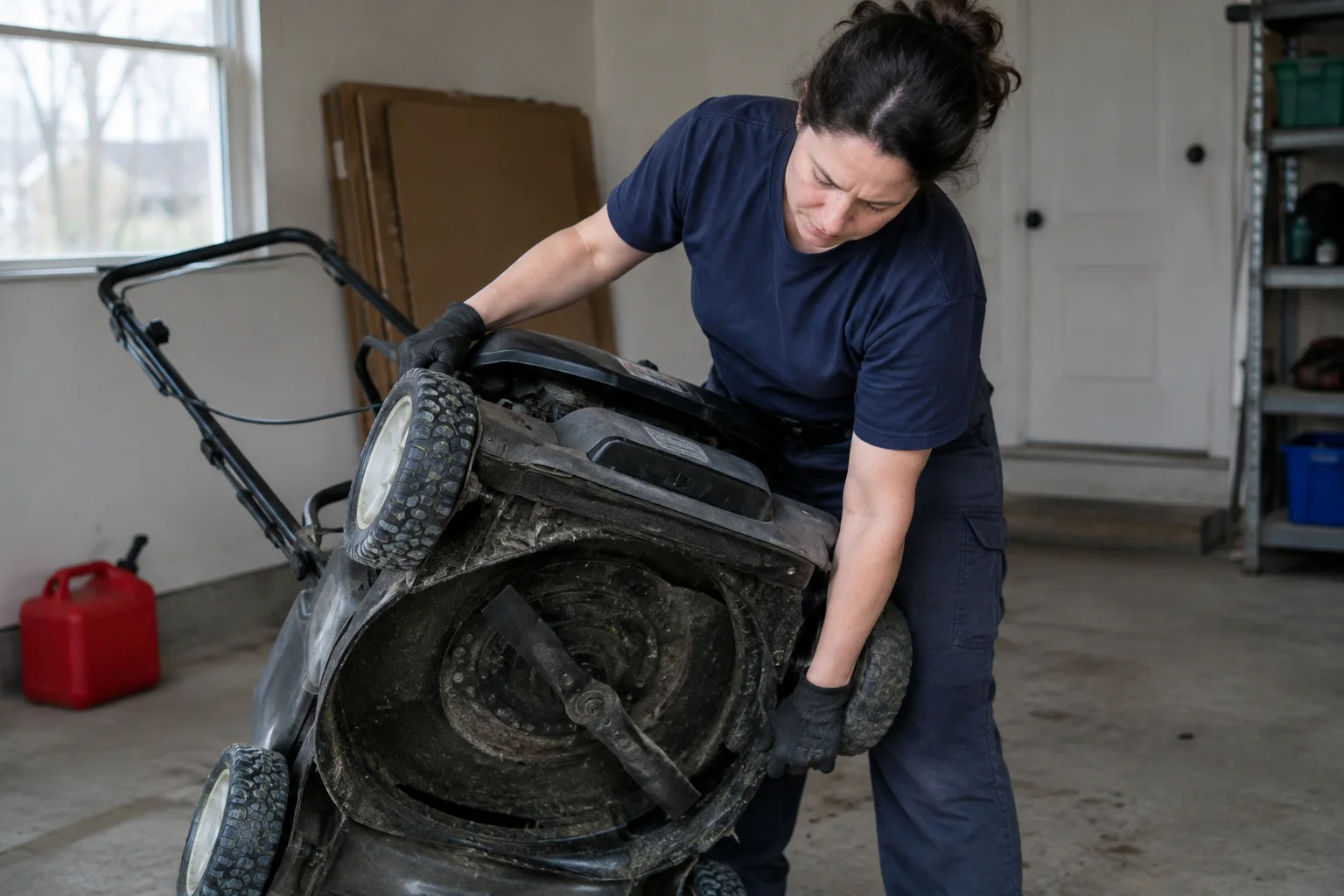
- Run engines dryStop refueling mowers and blowers a few weeks out and run them until they stop. Leftover fuel in cans should be used up or given away; it does not go on the truck.
- Disconnect the grillPropane cylinders are on FMCSA’s hazmat examples list. Close the valve, disconnect the cylinder, and plan to use it up, give it away or trade it in at a cylinder exchange. Scrape grease off the grill so it doesn’t soil nearby items.
- Sort the chemical shelfGroup paint, stain, thinner, weed and insect killers, pool chemicals and automotive fluids in one place. Anything you can’t use before moving day goes to a household hazardous waste collection, not the trash.
- Handle oil and batteries separatelyIllinois EPA says liquid motor oil and lead-acid batteries are banned from Illinois landfills. It points used motor oil to local recyclers and car batteries to retailers that take them back.
- Empty and dry outdoor gearDrain hoses, coolers and planters. Amenity suggests cleaning yard and garden items you plan to move and letting them dry or air out in the garage before they are packed.
Where hazardous leftovers go in Illinois
Illinois EPA runs one-day household hazardous waste collections on scheduled Saturdays and lists long-term collection sites in Naperville, Rockford, Chicago (Goose Island), Gurnee and Wood River. For households moving out of Naperville and much of the surrounding area, Naperville is the nearest site on that list.
According to Illinois EPA, collections take harsh chemical cleaners, paints, thinners, antifreeze, weed killers, insecticides, pesticides and similar products. One-day events do not accept explosives, propane tanks, fire extinguishers, smoke detectors, agricultural chemicals or business waste. Hours change, so confirm them with the site before you load the car.
Ready for a straight answer on your move?
Book a free, no-obligation in-home estimate with Amenity’s Plainfield team.
Plants, firewood and outdoor furniture on interstate moves
Houseplants are the item people most often expect a mover to take. On a short local move, plants usually travel more safely in your car, out of the heat or cold of a closed cargo box. Moves across state lines add regulations, and two of them matter for households in the Chicago suburbs.
The spongy moth rule for outdoor household items
Spongy moth, the pest once called gypsy moth, lays egg masses on lawn furniture, grills, toys, trailers and stacked firewood. Under federal rule 7 CFR 301.45-4, outdoor household articles may not be moved interstate from a quarantined area into a non-quarantined area without a certificate or an outdoor household article document. The USDA’s spongy moth page says you must inspect for and remove egg masses before moving from inside a quarantine area to outside one, and it offers a printable self-inspection checklist.
The Illinois Department of Agriculture’s March 2022 quarantine order covers Cook, DuPage, Kane, Kendall and Will counties, along with Lake, LaSalle, McHenry, Boone and Winnebago, and APHIS’s federal quarantine map shows the same ten counties as active federal quarantine areas. If you’re leaving DuPage County, Will County or a neighboring county for a state outside the quarantine, check the current APHIS quarantine map and complete the checklist. For moves between April and August, APHIS says to inspect on moving day if you can, or keep the items under a sealed tarp, indoors, or in a closed truck until you go.
Firewood is simpler. APHIS’s advice is not to move it at all: buy firewood near your new home and burn it where you bought it.
State border inspections for houseplants
Some states inspect plants at the border. California’s Department of Food and Agriculture, for example, says private individuals moving their own houseplants must declare them to border inspectors and keep them easy to examine, and that people using commercial movers should have house plants listed at the top of the inventory. CDFA describes eligible houseplants as grown indoors in sterile, packaged commercial potting mix, not plants kept outdoors even part of the year. Check your destination state’s agriculture department before you pack a single pot.
Cold is the other risk for plants on a Chicago-area move. A cargo box that stands open during a January load is hard on tropical plants, so carry them in the heated car; our guide to moving in winter around Chicago covers other cold-sensitive items.
Pets, fish and other animals
Household movers don’t carry pets. The cargo box of a moving truck is closed, dark and not set up for animals, and nobody rides in it. Plan for every animal to travel with you, and on moving day keep pets in a closed room or with a friend while the crew carries furniture through propped-open doors.
For an interstate move, the rules come from your destination. The USDA’s pet travel guidance says APHIS doesn’t regulate owners moving their own pets between states; the receiving state or territory sets the requirements, which can include a health certificate, updated vaccinations, diagnostic testing or treatments. APHIS suggests contacting your veterinarian as soon as you know your travel details. It does regulate businesses that transport pets for owners, so check credentials if you hire a pet shipper.
Aquariums need a plan of their own. Fish travel with you in bags or buckets of their own tank water, and the drained tank, with gravel removed, can go on the truck if your mover accepts it. Birds, reptiles and small mammals ride with the family as well, with food, records and carriers kept in the car.
Valuables, documents and medicine: keep them with you
The Illinois Commerce Commission’s consumer guide to household moves is direct about this: never pack jewelry, money, important papers, medicines or other valuable articles for shipment on the mover’s truck. Carry them with you, because the mover is not responsible for them.
Interstate moves add a second reason. Under Full Value Protection, federal rules let a mover limit its liability for articles of extraordinary value, meaning items worth more than $100 per pound such as jewelry, silverware, china, furs and antiques, unless you list them on the shipping documents. If you waive Full Value Protection and accept released value, the mover’s liability is 60 cents per pound per article, so a 5-pound laptop would be covered for $3 no matter what it cost. Our guide to full value protection vs. released value explains both options.
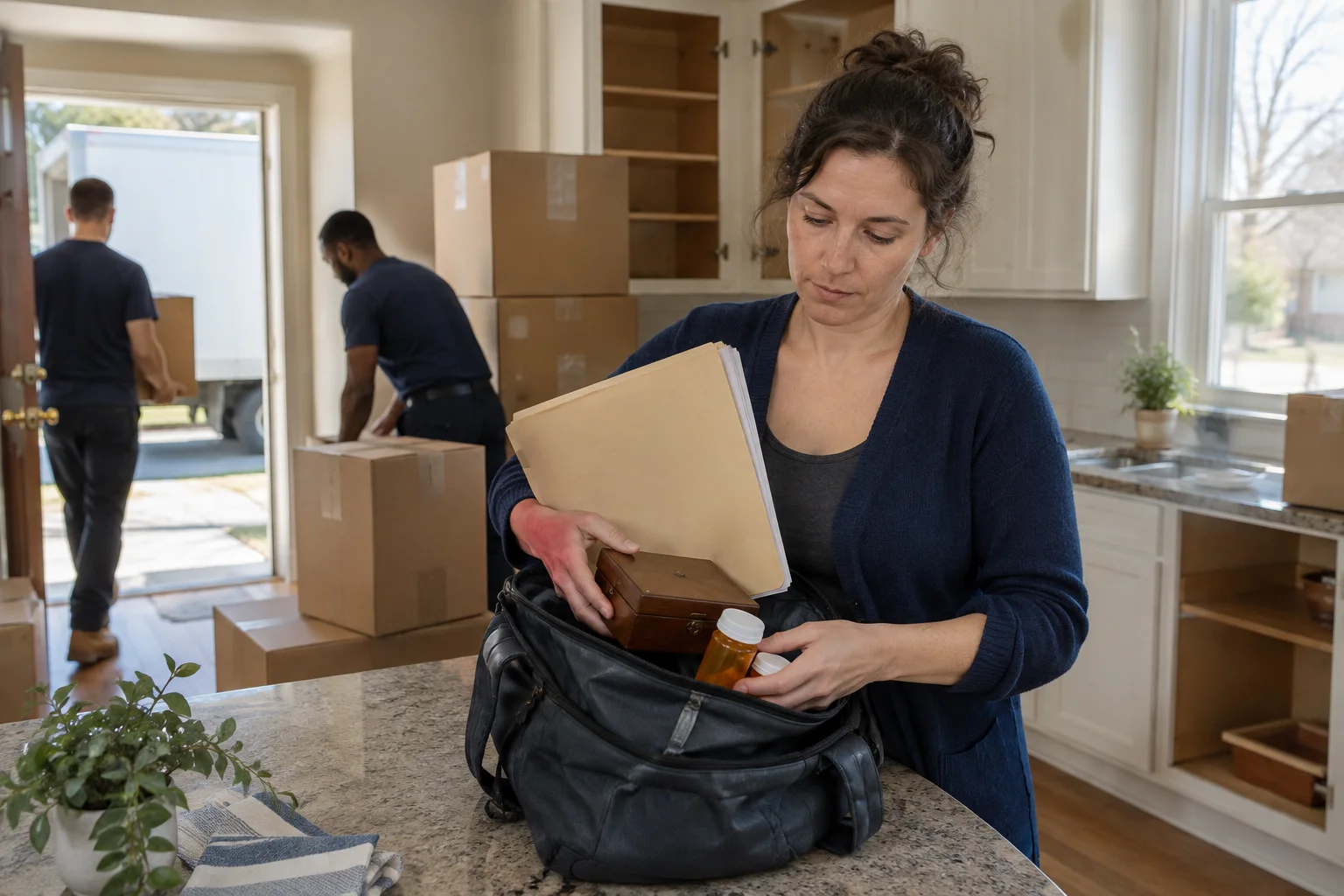
- Cash, checks, jewelry, watches, and coin or stamp collections
- Passports, birth certificates, Social Security cards, wills and estate papers
- Closing documents, leases, your moving estimate and bill of lading
- Prescriptions, medical devices and a week of over-the-counter basics
- Laptops, external drives, phones, chargers and spare batteries
- Keys, garage door openers and alarm codes for both homes
- Family photos, home videos and anything that can’t be replaced
- Pet food, leashes, carriers and veterinary records
If you’re booking professional packers, tell them which drawers and boxes are off-limits before they start, because packers pack what they find. Our guide on how to pack for a move explains how to build an essentials box that rides in your car.
Items movers take with conditions
Some items aren’t banned, but they come with rules. Raise each of these at the estimate so the crew arrives knowing what it is handling and the paperwork reflects it.
Firearms, ammunition and safes
Federal law (18 U.S.C. 922(e)) requires written notice to a common or contract carrier when you deliver a package containing a firearm or ammunition for interstate shipment. Ammunition and gunpowder are also on DOT’s hazmat list, so expect many movers to refuse them outright. Unload every firearm, ask your mover for its written policy, and plan to carry ammunition yourself in line with the laws of each state you pass through.
Empty a gun safe before moving day; the contents are easier to account for when they travel with you, and the safe is lighter. Amenity notes that gun safes weigh roughly 300 to 2,000 pounds; it moves them with power dollies and can store them. See gun safe moving and our guide on how to move a gun safe.
Appliances with gas, water or refrigerant
Gas ranges and dryers need the gas supply shut off and capped, washers need their hoses drained, and refrigerators should be emptied, defrosted and dried. Federal rules list appliance servicing as an accessorial service and let a mover arrange third-party work as an advanced charge, so ask whether the mover’s crew, a technician it hires, or your own contractor handles each disconnect, and get the answer on the written estimate.
Pianos, hot tubs and other heavy specialty items
Pianos and hot tubs move all the time, but not as an afterthought. A hot tub has to be drained and its power disconnected before the crew arrives, and a piano needs its own line on the estimate for equipment and crew. Amenity handles piano moving and hot tub and spa moving, and can store hot tubs and spas when the new place isn’t ready.
Beds and furniture that come apart
Taking apart bed frames, cribs, desks and tables is ordinary work for a full-service crew, though it adds labor time. Bag the hardware, label the bag, tape it to the frame, and confirm on the estimate whether disassembly and reassembly are included.
Sort it before the estimate, not on moving day
The easiest time to deal with non-allowable items is before anyone quotes your move. An estimator who sees a garage full of chemicals or a shed of fuel cans can tell you up front what stays behind, and you avoid a crew leaving items in the driveway on moving day.
- Walk every storage spaceGo through the garage, basement, under-sink cabinets, sheds and crawl spaces with three bins: dispose, carry with you, and ask the mover.
- Book the in-home estimateAmenity offers free, no-obligation in-home visual estimates. Show the estimator the ask-the-mover bin and get answers in writing; our guide to what happens during an in-home estimate explains what to have ready.
- Put disposal on the calendarLong-term hazardous waste sites keep limited hours and one-day collections run only on scheduled Saturdays, so plan the trip two to three weeks out.
- Eat down the fridge and pantryPlan meals around what’s open. Ask whether your mover accepts sealed pantry items; frozen and refrigerated food should be eaten, given away or carried in a cooler.
- Pack the carry-with-you bag lastDocuments, medicine, valuables and chargers go in a bag that stays in your car from the first box to the last.
The details shift with distance. A local move within Illinois falls under Illinois Commerce Commission rules, while a long-distance move adds federal hazmat liability terms and destination-state plant and pet rules. The principle stays the same: if it can burn, spoil, breathe or never be replaced, it doesn’t belong in the truck.
Keep reading
- Rental Truck vs. Hiring Movers
- How to Pack for a Move
- Moving Scam Red Flags
- Moving From Chicago to the Western Suburbs
Browse the full moving guide library or see every moving service.
Frequently asked questions
What items will movers not move?
Movers refuse hazardous materials such as gasoline, propane cylinders, paint, thinners, aerosols, fireworks, ammunition and pool chemicals, plus perishable food and pets. Most also won’t take live plants on long moves and advise against packing cash, jewelry, medicine and documents. The exact list varies by company, so ask for it in writing during your estimate.
Do movers take apart your bed for you?
Full-service crews generally disassemble and reassemble standard bed frames, and the time is part of the labor on your move. Confirm it’s listed on your written estimate. Point out adjustable bases, wall beds, bunk beds or antique frames to the estimator, since they can take longer or need a different approach.
Can movers move plants?
On a local move within Illinois, some movers will load houseplants at your request, but plants usually fare better in your car. For interstate moves, check destination rules first: some states inspect plants at the border, and federal spongy moth rules require inspecting outdoor household items when you leave a quarantined area such as DuPage or Will County.
Will movers move a gas grill or propane tank?
The grill can usually go once it’s cleaned and the propane cylinder is disconnected. The cylinder itself stays off the truck, because FMCSA lists propane cylinders among the hazardous materials you can’t ship in household goods. Use it up, give it to a neighbor or trade it in at a cylinder exchange before you move.
Can I pack cleaning supplies and aerosol cans?
Aerosol cleaners, disinfectants, hairspray and spray paint are on DOT’s hazmat list, and so are bleach and many pool and garden chemicals. Use them up or take them to a household hazardous waste collection. FMCSA allows small quantities of medicinal and toilet articles, up to 70 ounces total, but ask your mover before packing any.
Will movers move a lawn mower or snow blower?
Yes, once the fuel tank is empty. Fuel-powered equipment that still contains fuel is hazmat in transport, so run the engine dry or drain it, and keep gas cans out of the shipment. Amenity’s packing guidance specifically mentions draining fuel from lawn mowers and snow blowers before moving day.
Can movers move food?
Frozen and refrigerated food doesn’t belong on a moving truck, and perishables shipped without the mover’s knowledge can limit its liability for damage they cause. Sealed pantry goods are a separate question, so ask your mover. On a long-distance move priced by weight, heavy canned goods may cost more to ship than to replace.
Do movers move guns?
Some do, under conditions. Federal law requires written notice to a carrier when firearms or ammunition are shipped interstate, and ammunition is on DOT’s hazmat list, so many movers won’t take it. Unload every firearm, ask your mover for its written policy, and plan to carry ammunition yourself where the law allows.
Sources
- Before Requesting Services from Any Mover (Subpart B) — Federal Motor Carrier Safety Administration
- Check the Box: Is it Hazmat? — U.S. Department of Transportation
- Appendix A to Part 375 — Your Rights and Responsibilities When You Move — Electronic Code of Federal Regulations (FMCSA)
- Spongy Moth — USDA Animal and Plant Health Inspection Service
- Household Hazardous Wastes — Illinois Environmental Protection Agency
- Household Moves in Illinois: A Consumer's Guide (rev. 3/2026) — Illinois Commerce Commission
Who handles your move
Local Moving Specialists is operated by Amenity Moving & Storage Inc., 10028 Mandel St, Plainfield, IL 60585 — a family-run Illinois mover since 1986. Illinois household goods license ILCC 73744 MC-C. Interstate moves are transported under the authority of Wheaton Van Lines, Inc. (USDOT 70719, MC-87113), for which Amenity is an authorized agent. See licenses & disclosures.
Last reviewed November 11, 2026 against Amenity Moving & Storage’s published service details and the public sources listed above.
Ready for a straight answer on your move?
Book a free, no-obligation in-home estimate with Amenity’s Plainfield team.